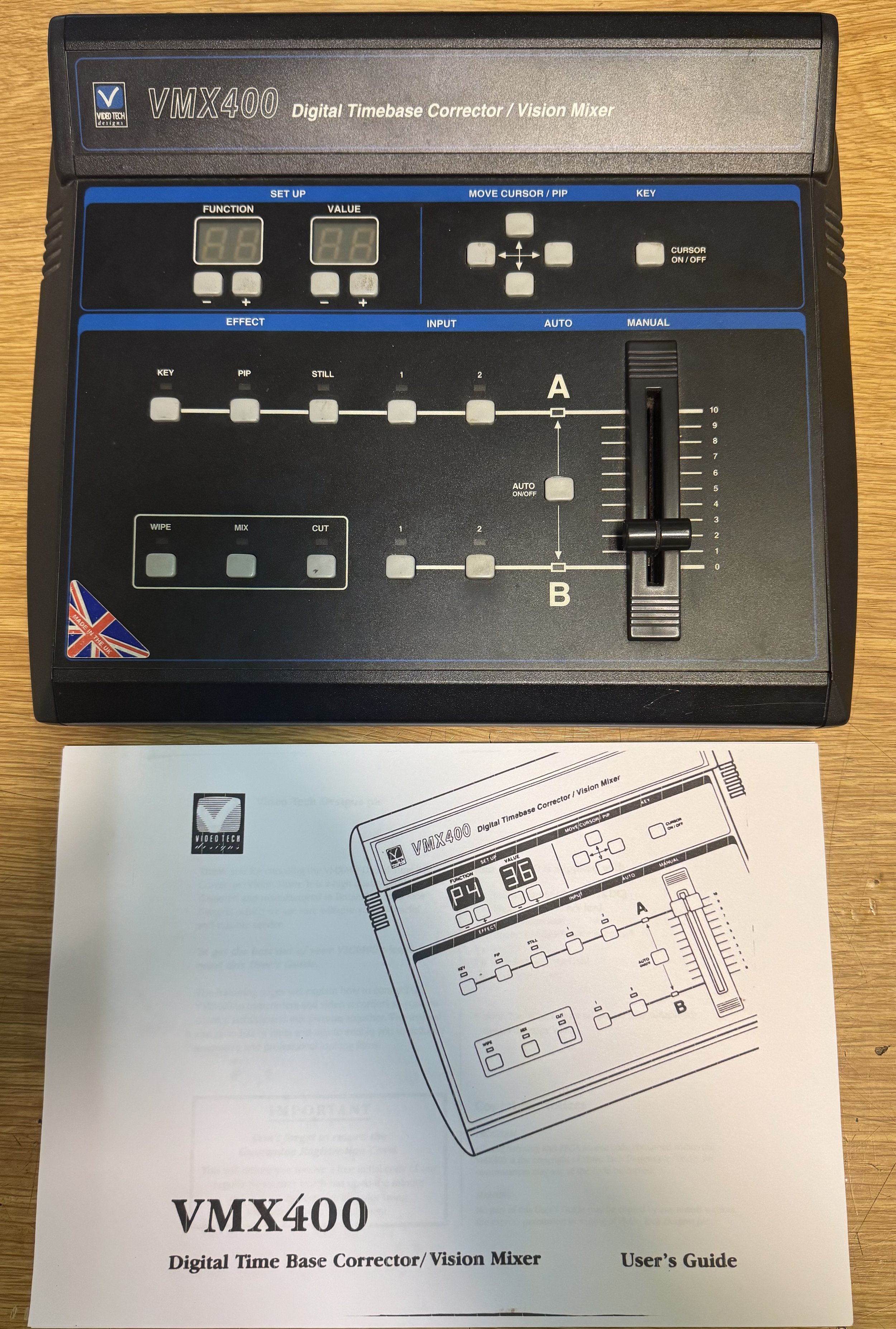
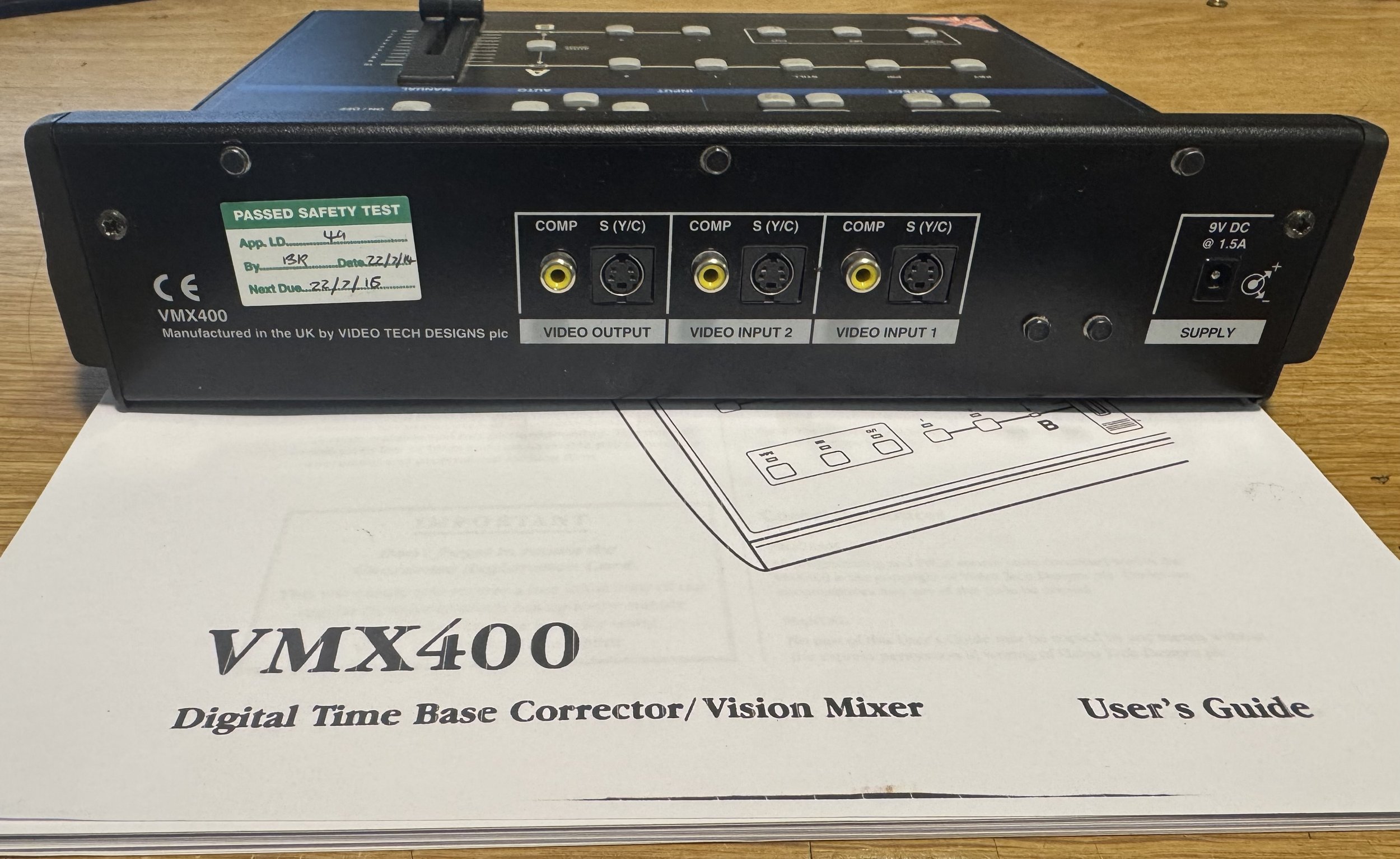
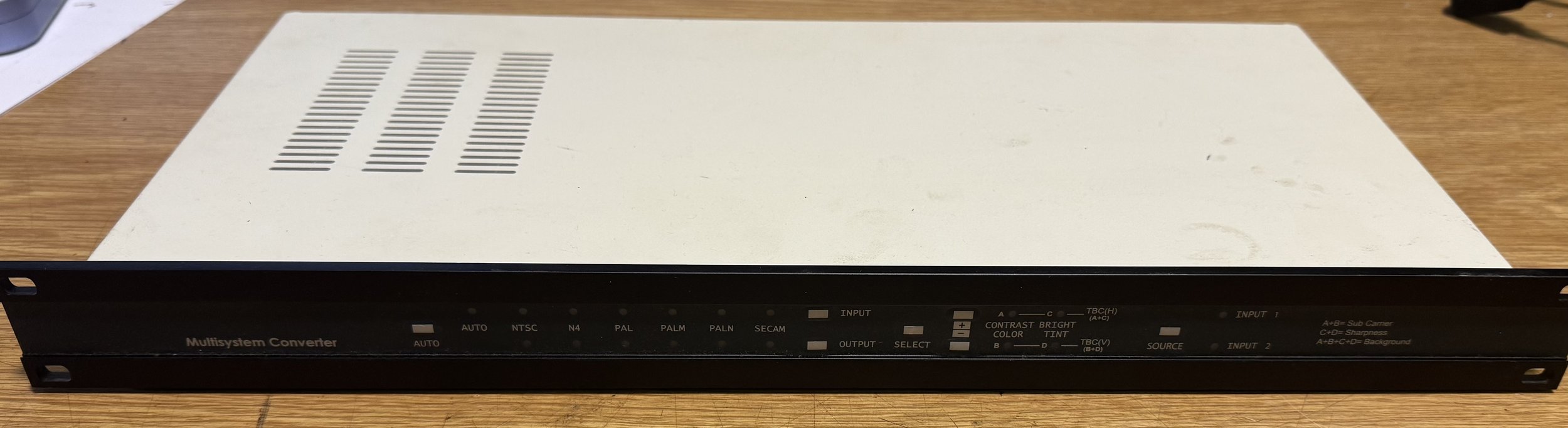
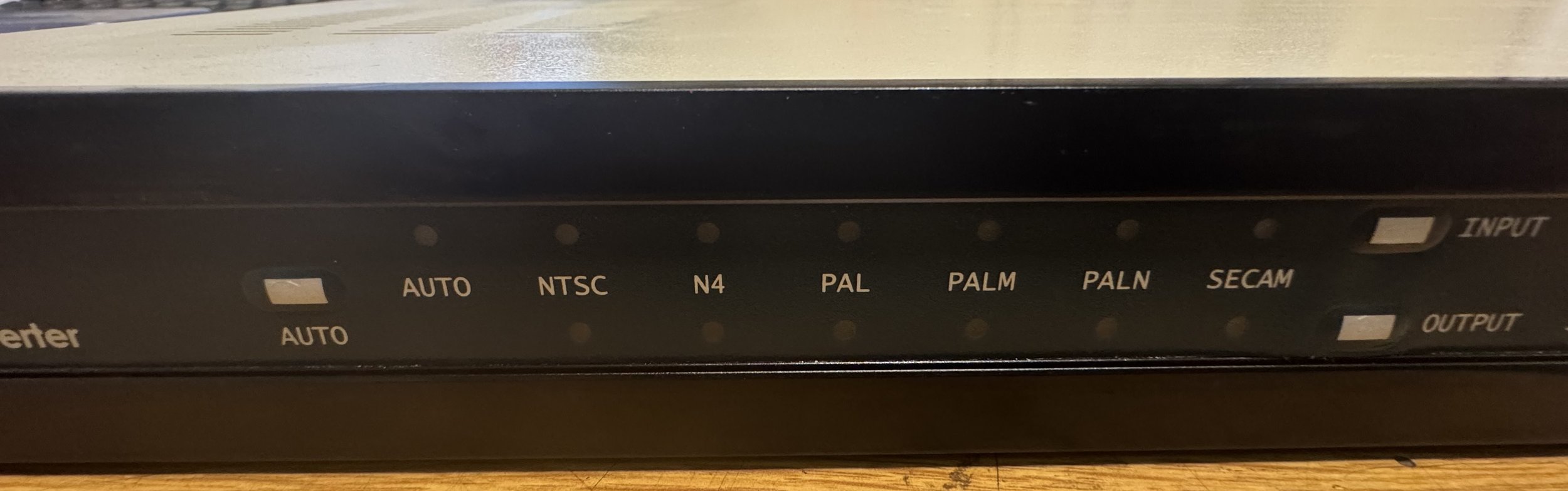
This Panasonic mixer has a built in digital frame synchronizer, which in most cases, is always cheaper than buying a standalone TBC. The need for mixing video signals has now moved away from old digital AV mixers and is something that is usually done via a PC or Mac. These old devices are very useful, but now hard to find. They have both phono and bnc inputs - as well as a sound mixer to pass through audio too.
“With a Digital Frame Synchronizer there is no need for the TBC component as one performs the function of synchronizing simultaneous inputs through digital conversion (using a RAMDAC) and then using a simple algorithm to generate the bitmap at each point of the fade/wipe/dissolve transfer (and adds cool features like mosaic, chroma and luminescence keying, paint, etc) and the other - Time Base Corrector essentially performs the function maintaining the analog signal - Panasonic's Digital Frame Synchronizer is what makes their products so appealing”
- The above taken from a videohelp forum post back in 2005, when discussing does the WJ-AVE5 have TBC capabilities…
In many cases, this unit offers more choice than a standalone single input TBC, as it throws in extra functions - such as useful wipes and fades if required. It can also mix between two video sources, or it can just have two sources connected up to save constantly unplugging wires. For instance, Input one could be your VHS deck, with Input two being Betamax. Personally, I’ve always just used it as a signal passthrough to improve picture stability. It’s tested and working, although does have age related wear and marks as pictured. Some of the plastic tops are missing from the sliders, which doesn’t affect operation.
The manual can be downloaded here:
https://www.scribd.com › document › wj-ave5-pdf
This Panasonic mixer has a built in digital frame synchronizer, which in most cases, is always cheaper than buying a standalone TBC. The need for mixing video signals has now moved away from old digital AV mixers and is something that is usually done via a PC or Mac. These old devices are very useful, but now hard to find. They have both phono and bnc inputs - as well as a sound mixer to pass through audio too.
“With a Digital Frame Synchronizer there is no need for the TBC component as one performs the function of synchronizing simultaneous inputs through digital conversion (using a RAMDAC) and then using a simple algorithm to generate the bitmap at each point of the fade/wipe/dissolve transfer (and adds cool features like mosaic, chroma and luminescence keying, paint, etc) and the other - Time Base Corrector essentially performs the function maintaining the analog signal - Panasonic's Digital Frame Synchronizer is what makes their products so appealing”
- The above taken from a videohelp forum post back in 2005, when discussing does the WJ-AVE5 have TBC capabilities…
In many cases, this unit offers more choice than a standalone single input TBC, as it throws in extra functions - such as useful wipes and fades if required. It can also mix between two video sources, or it can just have two sources connected up to save constantly unplugging wires. For instance, Input one could be your VHS deck, with Input two being Betamax. Personally, I’ve always just used it as a signal passthrough to improve picture stability. It’s tested and working, although does have age related wear and marks as pictured. Some of the plastic tops are missing from the sliders, which doesn’t affect operation.
The manual can be downloaded here:
https://www.scribd.com › document › wj-ave5-pdf

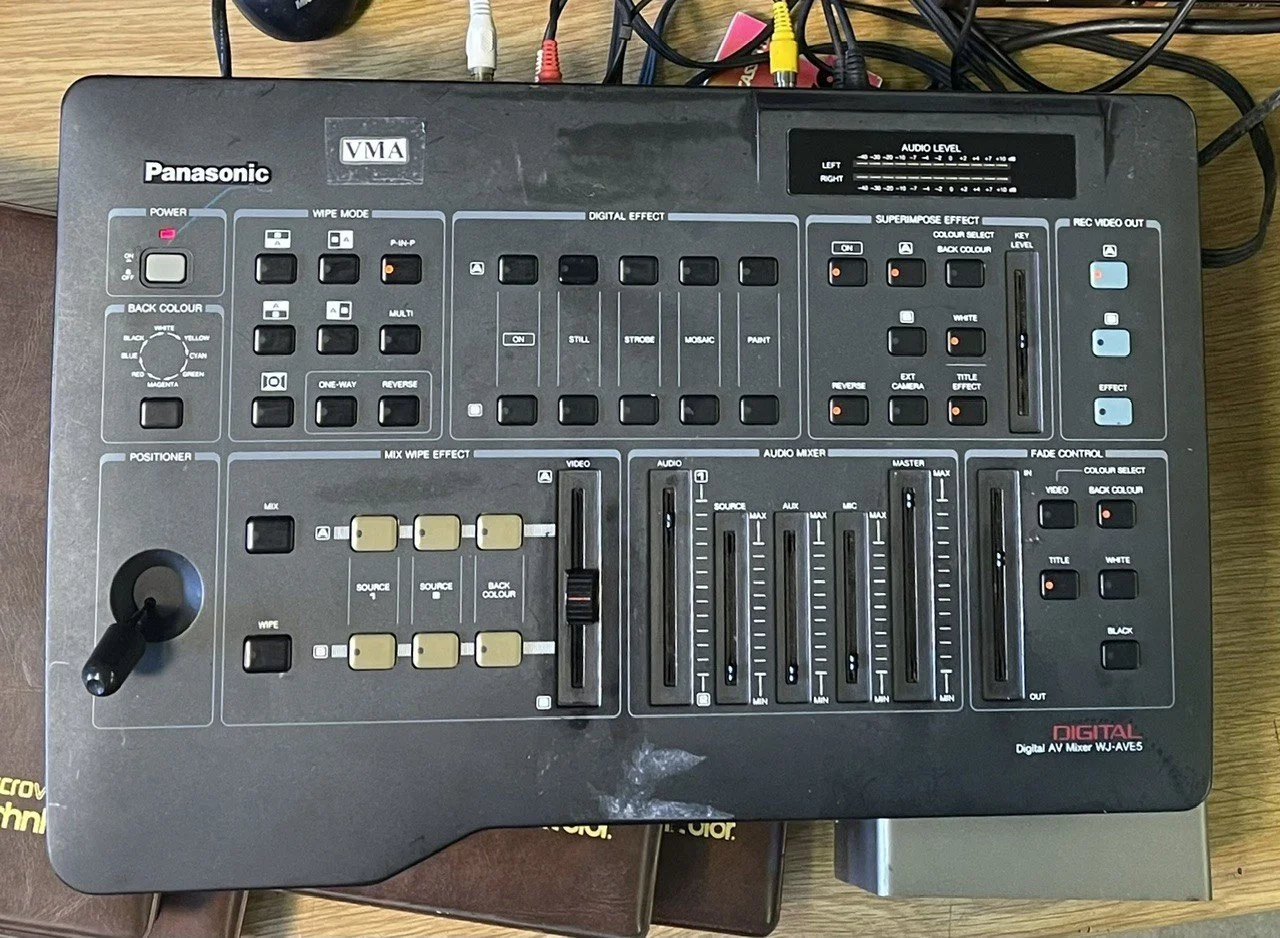 Image 1 of 3
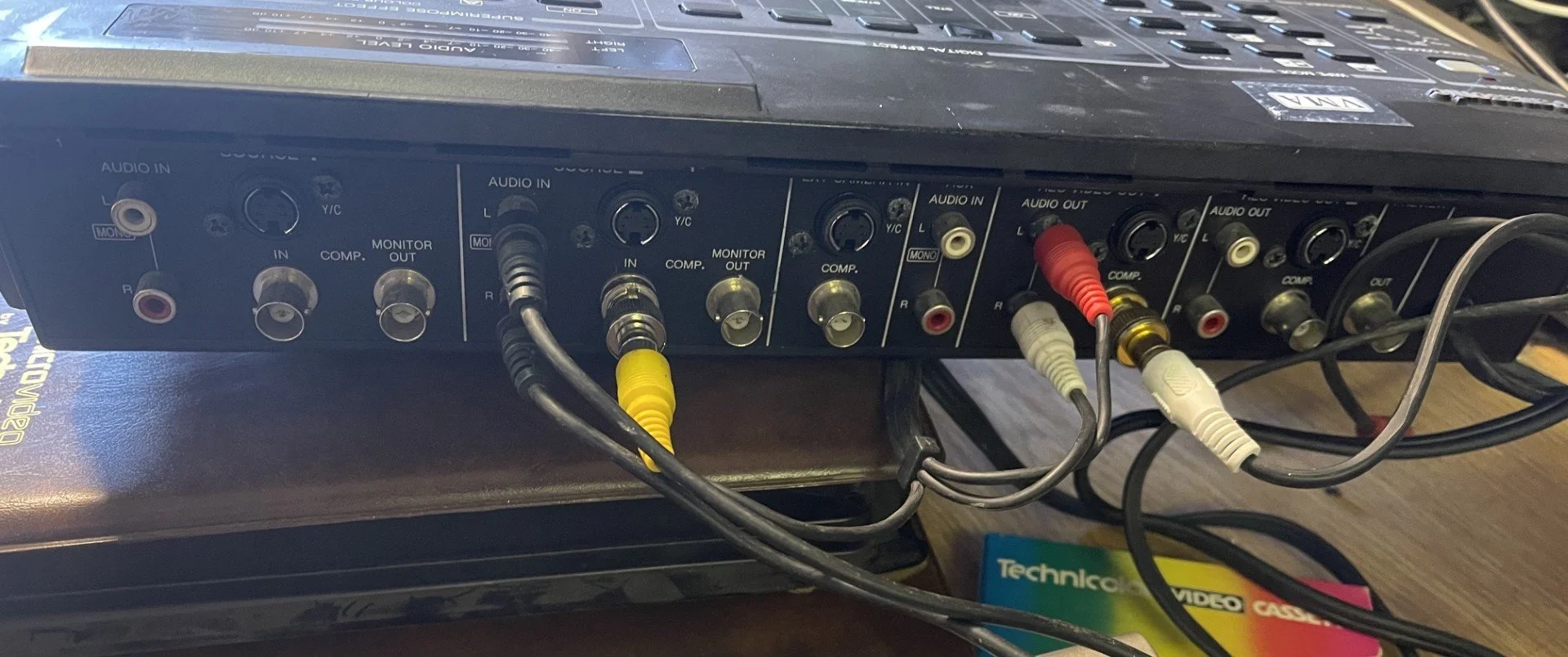 Image 2 of 3
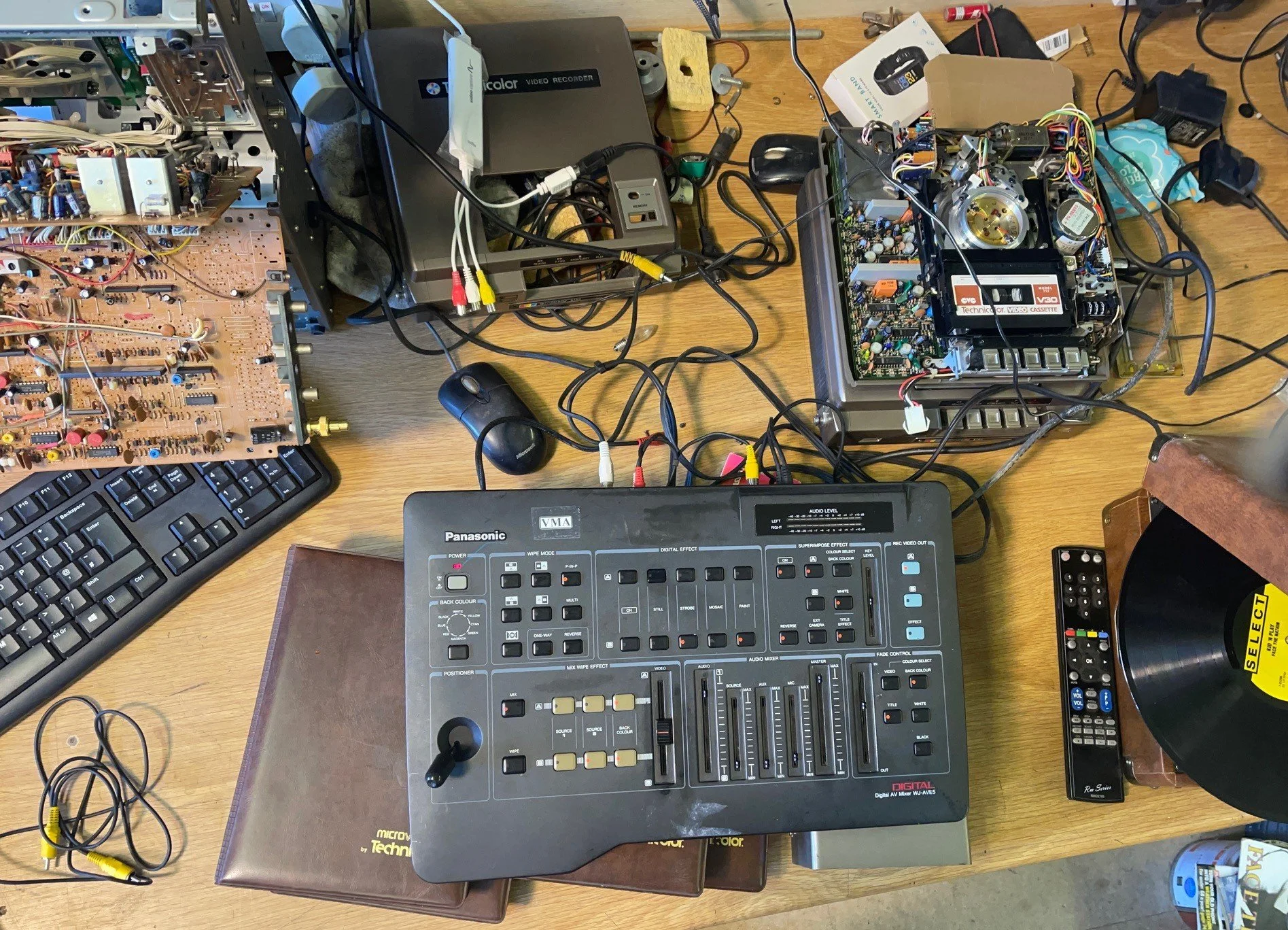 Image 3 of 3